Journey Through Bihar: Discovering Heritage, Culture, and Local Insights

September 12, 2026 · 25 reads
Introduction
Stepping into Bihar means walking through centuries of layered history, profound spiritual roots, and vibrant traditions that continue to shape daily life. For anyone eager to look past generalized descriptions and truly connect with the soul of the region, finding dependable, grounded information makes all the difference. MeraApnaBihar.com acts as a dedicated digital guide built to bridge this very gap, offering thoughtfully organized insights into regional tourism, heritage architecture, everyday culture, local cuisine, and community festivals. Whether you are charting out an educational road trip through ancient seats of learning or simply looking to stay connected to regional roots, having access to authentic local knowledge helps you experience Bihar with clarity and genuine appreciation.
Exploring the Purpose Behind MeraApnaBihar.com
The platform functions primarily as an information hub dedicated entirely to highlighting the diverse identity of the state. Rather than acting as a commercial booking agency, it serves as a digital knowledge center that categorizes regional topics into clear, readable guides. Readers turning to the site can find detailed breakdowns of historical landmarks, indigenous folk customs, traditional recipes, and local community gatherings. The core objective is simple: to present factual, easy-to-digest insights about the districts and traditions that define the region. By focusing on authentic heritage and practical guidance rather than flashy promotions, the platform helps both curious locals and outside visitors connect with the real character of the state.
Understanding Bihar Through Heritage, Travel, and Culture
Getting to know the state requires looking at it through multiple perspectives, bridging its ancient past with its modern-day rhythm. As a foundational cradle of civilization, the region helped shape early philosophies, governance models, and spiritual movements that left a lasting mark across South Asia. Travelers exploring Bihar Tourism often find themselves drawn to ancient university ruins, deeply sacred pilgrimage circuits, and architectural remnants that have survived millennia. Beyond physical monuments, the spirit of the area lives on in its regional dialects, folk arts, and community rituals. Grasping this landscape means seeing how historical milestones continue to influence everyday life and cultural expressions across different districts.
Bihar Tourism and Major Travel Experiences
The region presents a diverse mix of travel experiences tailored to different interests, from spiritual contemplation to archaeological exploration. Engaging with Bihar Tourism often means following established historical routes that reveal centuries of human history and architectural evolution.
- Historical Itineraries: Journeys centered around ancient royal capitals, excavated monastic complexes, and early urban administrative sites.
- Spiritual Trails: Meaningful routes connecting major pilgrimage destinations revered across multiple religious traditions.
- Architectural Study: Examining ancient brick structures, monolithic pillars, and remnants of early structural engineering.
- Nature and Leisure: Unwinding in protected wildlife sanctuaries, riverine landscapes, and peaceful countryside environments.
Bihar Tourist Places and Places to Visit
Exploring the region requires identifying specific destinations that showcase its true historical and cultural weight. Strategic planning helps travelers make the most of these locations.
Historical Destinations
Locations like ancient monastic complexes and archaeological museums offer a direct link to early scholastic traditions. Visitors can examine excavated foundations, old brick layouts, and artifacts that reveal how early residential and educational communities operated.
Religious and Spiritual Places
The area holds profound spiritual significance for millions. Major pilgrimage hubs draw practitioners, scholars, and seekers from all over the world, providing spaces for quiet reflection and a look at sacred architecture.
Cultural and Heritage Sites
Traditional art villages and local craft centers preserve indigenous skills like Madhubani painting, pottery, and handloom weaving. These spots let visitors witness living artistry passed down through generations.
Nature and Leisure Destinations
Protected wildlife reserves, water bodies, and regional green spaces offer a chance to observe local flora and fauna. These spots provide a quieter, slower-paced contrast to heavy historical sightseeing.
Educational and Important Places
Regional archives, historic libraries, and research institutes house manuscripts and records detailing the evolution of local literature, social reform, and governance.
Bihar Travel Guide for Better Trip Planning
A reliable Bihar Travel Guide helps visitors manage logistics, seasonal weather shifts, and long travel distances efficiently. Because historical sites and natural attractions are spread across varied districts, good preparation ensures a smooth experience.
| Planning Factor | What to Check | Why It Matters |
| Seasonality | Weather patterns and local temperature shifts | Ensures comfortable outdoor exploration without severe weather hurdles. |
| Transportation | Rail connectivity, road conditions, and local transit | Minimizes delays when moving between distant heritage spots. |
| Accommodation | Available lodging options near your target zones | Secures a comfortable place to rest after long days on foot. |
| Local Etiquette | Dress codes and customs at shrines and historic sites | Demonstrates genuine respect for local traditions and residents. |
Things to Do in Bihar
Curious travelers can engage with the state through an array of active experiences that go far beyond standard sightseeing.
- Walking through excavated university ruins while picturing their original scale.
- Watching local artisans craft traditional Mithila paintings and handloom textiles.
- Participating respectfully in regional festival gatherings and neighborhood events.
- Sampling authentic local thalis and seasonal sweets prepared in traditional ways.
- Exploring rural weekly markets and haats to observe everyday commerce and craftwork.
- Visiting community libraries and local cultural centers to read regional literature.
- Strolling along riverbanks and observing peaceful rural agricultural routines.
- Documenting the unique architectural details of older homes in historical towns.
Bihar Culture and Heritage
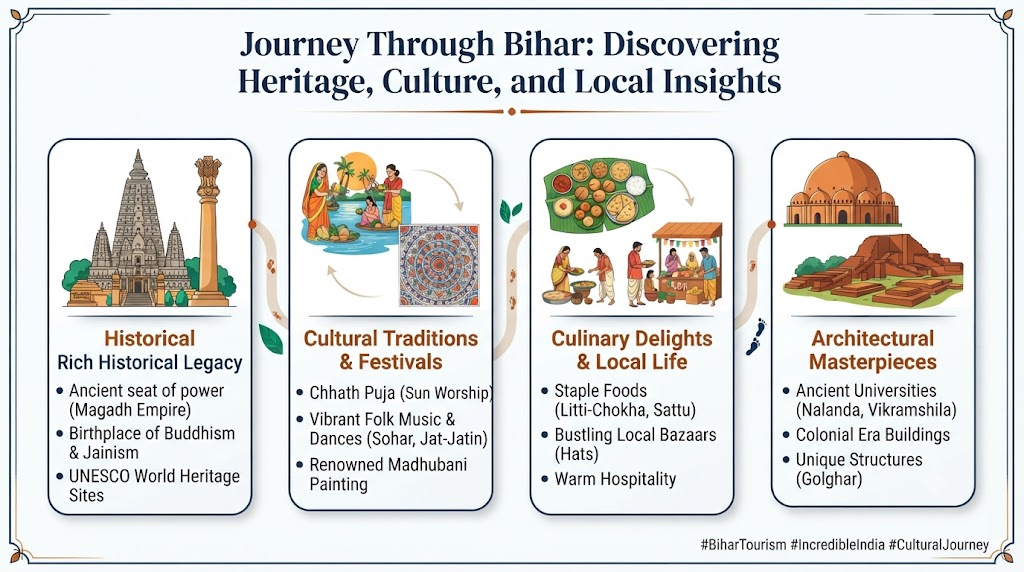
The cultural fabric of the state is woven from ancient philosophies, folk traditions, and strong community bonds. Bihar Culture and Heritage encompasses distinct visual arts, folk music, textile traditions, and oral histories that have endured centuries of social change. Folk paintings like Madhubani and Manjusha reflect mythological narratives and a deep bond with nature, while regional theater traditions like Bidesia address everyday social issues through performance. Keeping this heritage alive relies on supporting the local artisans, weavers, and folk artists who maintain these practices without commercial distortion.
Famous Food of Bihar
Traditional cuisine in the region relies on simple, wholesome ingredients adapted to seasonal changes and local agriculture. The Famous Food of Bihar balances robust spices, mustard oil infusions, and slow-cooking methods. Litti Chokha stands out as the ultimate culinary symbol, featuring roasted whole-wheat dough balls stuffed with spiced sattu, served alongside a smoky mash of roasted eggplant, tomato, and potato. Other regional staples include Khaja, a flaky layered sweet pastry, traditional pittha, and various lentil dishes paired with locally grown rice.
Festivals of Bihar
Festivals serve as community anchors, bringing families and neighborhoods together for shared celebration and ritual observation. The Festivals of Bihar reflect deep ties to agricultural cycles, family bonds, and historical lore. Chhath Puja stands as the most prominent regional celebration, dedicated to the Sun God and Chhathi Maiya, marked by rigorous fasting, riverside gatherings, and offerings of seasonal fruits. Other notable celebrations include Makar Sankranti (Tila Sankranti), known for kite flying and sesame sweets, and Sama Chakeva, which celebrates sibling bonds through clay art and folk songs.
Practical Tips for Readers
- Do Your Homework: Read up on the historical context of destinations before arriving to fully appreciate what you are seeing.
- Dress Respectfully: Keep your clothing modest when visiting religious shrines, rural communities, and traditional family homes.
- Double-Check Logistics: Confirm transport schedules and opening hours for museums and monuments ahead of time.
- Stay Prepared: Carry plenty of water and comfortable walking shoes, especially when exploring sprawling archaeological parks.
- Support Local Makers: Purchase arts, crafts, and textiles directly from verified cooperatives and traditional creators.
Common Mistakes to Avoid
- Overpacking Itineraries: Trying to visit too many distant historical sites in a single day without accounting for transit time.
- Ignoring Local Norms: Overlooking dress codes or photography restrictions at sacred or culturally sensitive locations.
- Neglecting the Weather: Traveling during extreme weather peaks without preparing for high heat or heavy monsoon conditions.
- Trusting Unverified Tips: Relying on casual, unverified travel advice instead of checking reliable local sources.
Who Can Benefit From This Information?
Tourists and Travelers
People planning physical trips across the state can use structured itineraries, destination insights, and practical travel guides to navigate historical sites smoothly.
Students
Learners studying Indian history, sociology, or regional art can access reliable foundational knowledge about ancient civilizations, folk traditions, and local governance.
Families
Family units can plan educational outings, cultural excursions, and festive visits that offer safe, enriching experiences for all generations.
History and Culture Enthusiasts
Researchers and hobbyists passionate about archaeology, architecture, and indigenous art can deepen their understanding of Bihar’s preserved heritage.
Local Residents
Inhabitants of the state can discover lesser-known historical landmarks, traditional recipes, and cultural festivals right in their own backyard.
Job Seekers
Individuals tracking regional administrative updates and employment notices can find organized guidance on recruitment processes, eligibility, and preparation.
Step-by-Step Guide to Exploring Bihar
- Step 1: Define Your Purpose: Decide whether your goal is historical sightseeing, spiritual exploration, cultural study, or general regional research.
- Step 2: Choose Destinations: Pick specific towns, monuments, or cultural pockets that match your primary interests and available time.
- Step 3: Read Up on History: Review background information on your chosen spots to understand their architectural and social significance.
- Step 4: Map Your Route: Arrange your travel path logically to avoid unnecessary backtracking between distant districts.
- Step 5: Check Logistics: Look into transportation options, local weather forecasts, and seasonal accessibility before locking in dates.
- Step 6: Plan Your Food and Stops: Identify local food specialties to try and traditional craft markets to visit along your way.
- Step 7: Prepare Essentials: Pack appropriate clothing, necessary documentation, and reference notes for your trip.
- Step 8: Confirm Final Details: Double-check operational timings, ticket details, and travel advisories right before you leave.
Common Challenges
Navigating regional travel and discovery comes with its own hurdles. Distances between archaeological sites can be substantial, demanding careful transit planning. Additionally, sorting through the sheer volume of historical data online can feel overwhelming for first-time visitors trying to build an efficient itinerary. Seasonal weather shifts, like intense summer heat or monsoon delays, also require flexibility. Overcoming these challenges simply takes patience, realistic scheduling, and reliance on structured, dependable guides.
Best Practices
- Rely on trusted educational and informational platforms when researching historical sites and cultural traditions.
- Keep your daily schedules flexible to accommodate spontaneous discoveries or transit changes.
- Prioritize personal safety, health precautions, and respectful interactions with local communities at all times.
- Keep digital or printed copies of your travel notes and reference guides easily accessible.
Frequently Asked Questions
- What makes Bihar unique for travelers? The state offers deep historical roots, ancient monastic ruins, and spiritual trails that shaped early global philosophy.
- How should I plan a trip to historical sites in Bihar? Group nearby monuments into logical geographical circuits, giving yourself plenty of time at each archaeological spot.
- What is the best time of year to visit Bihar? The cooler winter months from October to March offer the most comfortable weather for outdoor exploration.
- What are the must-try foods in the region? Local favorites include Litti Chokha, Khaja, sattu-based snacks, and traditional seasonal sweets.
- How are major festivals celebrated here? Festivals like Chhath Puja involve community rituals, traditional folk songs, and gatherings along riverbanks.
- Where can I learn about traditional Bihar arts? Regions specializing in Madhubani painting and handloom weaving offer direct exposure to local artisan groups.
- Should I hire a guide for historical monuments? While optional, hiring a licensed local guide greatly enhances your understanding of the site’s history.
- What safety tips should travelers keep in mind? Practice standard travel awareness, respect local dress codes, and stay hydrated during outdoor sightseeing.
- How can I find reliable info on regional culture? Platforms focused specifically on Bihar provide curated overviews of local heritage, food, and traditions.
- Are there good resources for educational travel? Yes, numerous university ruins, museums, and research libraries cater directly to students and history buffs.
Conclusion
Approaching Bihar with an open mind, a sense of respect, and accurate information opens the door to immense historical and cultural depth. From ancient monastic ruins and vibrant festive traditions to comforting regional cuisine, the state offers rich educational value for every kind of traveler. Turning to structured, reliable resources allows you to experience the region authentically, ensuring your journey or exploration is both meaningful and well-prepared.
Leave a Reply