Modern Urology Treatment Options for Common Urinary Conditions

September 14, 2026 · 28 reads
Introduction
Dealing with urinary health changes or a new diagnosis can feel overwhelming. Whether you are trying to make sense of sudden discomfort, researching options for a kidney issue, or trying to figure out where to find the right medical team, having clear information matters. The urinary and reproductive systems—covering everything from the kidneys and bladder to the prostate—are vital to your everyday comfort and long-term health. Resources like UrologyHospitals.com exist to help bridge the gap, offering patients a straightforward way to learn about urological conditions, diagnostic paths, and specialist networks. This guide breaks down what you need to know about urological health, common treatment approaches, and how to navigate finding the right care team.
What Is Urological Health?
Urology is the medical specialty dedicated to the urinary tracts of men and women, as well as the male reproductive organs. This includes your kidneys, ureters, bladder, urethra, and the adrenal glands, alongside male-specific structures like the prostate and testes. Because these organs handle everything from filtering waste and regulating fluids to hormone production, even a minor disruption can impact your daily life. That is why getting a proper evaluation early on makes such a big difference. It helps catch small issues before they become complex, ensuring you get the exact level of care you need—whether that means simple lifestyle adjustments or advanced medical treatment.
Spotting the Signs: Common Symptoms
Urological issues usually make their presence known through physical changes. While symptoms vary depending on what is going on, certain red flags tend to prompt people to schedule a doctor’s visit:
- A burning or painful sensation when you urinate.
- A sudden, urgent need to get to the restroom immediately.
- Going much more frequently than usual, especially waking up multiple times throughout the night.
- Blood in your urine (which might look pink, red, or brownish).
- Trouble getting a stream started, a weak flow, or a stream that stops and starts.
- Aching or pressure in your lower abdomen, groin, or lower back/flank.
- Fever and chills, which can point toward a more serious infection or blockage.
Keep in mind: These symptoms aren’t tied to just one condition. Many different urological issues share similar warning signs, which is why a professional medical evaluation is always necessary to find out what is actually happening.
What Causes Urological Problems?
A mix of factors can influence your risk of developing urological conditions. Some are completely out of your hands, while others relate to daily habits:
- Age and Gender: Conditions like an enlarged prostate naturally become more common as men age, while anatomy plays a big role in why women tend to experience certain infections more often.
- Family History: Genetics can predispose you to things like kidney stones or specific bladder conditions.
- Daily Habits: Staying hydrated, eating a balanced diet, staying active, and avoiding smoking all play a massive role in keeping your kidneys and bladder healthy.
- Other Health Conditions: Chronic issues like diabetes, high blood pressure, or neurological disorders can directly affect how your urinary system works.
- Anatomy: Sometimes, natural structural traits or minor blockages can make it easier for infections or stones to develop.
Getting Answers: Diagnosis and Testing
To figure out the best course of action, a urologist needs to pinpoint the exact cause of your symptoms. Depending on what you are experiencing, the diagnostic process might include:
- A Detailed Medical History and Exam: Your doctor will talk through your symptoms, review your health history, and may perform a targeted physical examination.
- Lab Work: Simple urine tests (urinalysis and cultures) check for infection or abnormal cells, while blood tests can measure your kidney function or look at specific markers like PSA for prostate health.
- Imaging Scans: Ultrasounds, CT scans, or MRIs give doctors a clear look inside your body to spot stones, unusual masses, or blockages.
- Cystoscopy: A brief procedure where a tiny, flexible, lighted scope is used to look directly at the lining of your urethra and bladder.
- Urodynamic Testing: Specialized tests that measure how well your bladder holds and releases urine.
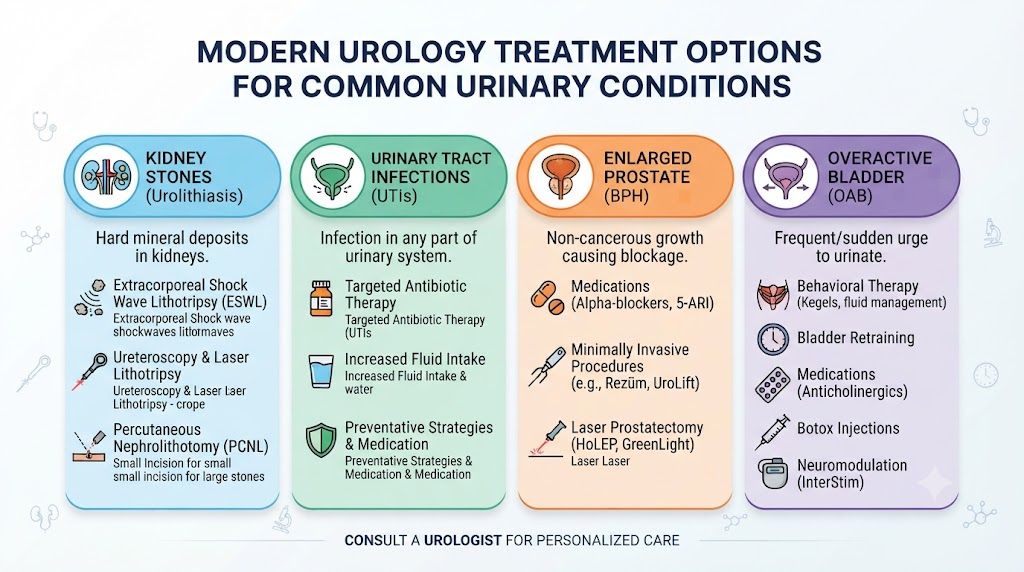
Exploring Urology Treatment Pathways
There is no “one-size-fits-all” approach in urology. Your treatment plan will depend heavily on your specific diagnosis, how advanced the condition is, your overall health, and what you prefer. Generally, care falls into a few categories:
- Observation and Lifestyle Shifts: Sometimes, the best first step is simply monitoring a stable condition over time, adjusting your fluid intake, or changing certain dietary habits.
- Medications: Prescription drugs can help manage symptoms, calm overactive tissues, shrink certain growths, or clear up infections.
- Minimally Invasive Care: Procedures performed using tiny scopes or specialized tools allow doctors to treat conditions without large incisions or long hospital stays.
- Surgery: When necessary, open, laparoscopic, or robotic-assisted surgeries are used to remove diseased tissue, repair anatomical problems, or clear severe blockages.
The Role of Urology Specialists
When dealing with complex or persistent issues, seeing a urology specialist is essential. These physicians undergo years of rigorous training focusing entirely on the medical and surgical management of the urinary and reproductive tracts.
A urologist doesn’t just perform surgery; they diagnose tricky conditions, craft customized treatment plans, manage long-term care, and work hand-in-hand with your primary care doctor and other specialists (like oncologists or nephrologists) to ensure you get well-rounded care.
Dealing with Kidney Stones
Kidney stones form when minerals and salts crystallize inside the kidneys. If they start moving down the urinary tract, they can cause sharp, intense pain.
- What It Feels Like: Severe pain in your back or side, nausea, painful urination, and blood in the urine.
- How They Are Managed: Small stones often pass on their own with plenty of water and pain relief. Larger or stuck stones require medical intervention.
- Procedures: Options range from shock wave lithotripsy (breaking stones apart with sound waves) and ureteroscopy (using a tiny scope to remove or break the stone) to percutaneous procedures for very large stones.
- Prevention: The main focus shifts to hydration, dietary changes based on what the stone was made of, and figuring out any underlying metabolic causes.
Navigating Prostate Cancer Care
Prostate cancer is one of the most common diagnoses among men. Treatment depends greatly on how fast the cancer is growing, its stage and grade, your overall health, and your personal preferences.
- The Treatment Spectrum: Options range from active surveillance (closely monitoring slow-growing tumors without immediate treatment) to targeted local therapies like surgery (radical prostatectomy) or radiation, and systemic treatments for more advanced cases.
- Making Choices: Deciding on a path involves deep conversations with your specialist about what you value most—balancing treatment effectiveness with your quality of life.
Managing an Enlarged Prostate (BPH)
Benign prostatic hyperplasia (BPH) happens when the prostate gland naturally enlarges with age. While it isn’t cancer, it can squeeze the urethra and cause very frustrating urinary symptoms.
- First Steps: Mild symptoms are often managed through lifestyle tweaks or medications that relax the prostate muscles or reduce its size.
- When Procedures Are Needed: If medications stop working, options like minimally invasive treatments or surgical procedures (such as a TURP) can help open up the urinary pathway.
Treating Urinary Tract Infections (UTIs)
UTIs happen when bacteria find their way into the urinary tract and multiply, usually leading to bladder or urethral irritation.
- Care Basics: A quick urinalysis confirms the infection, and a targeted course of antibiotics prescribed by a professional usually clears it right up.
- Recurrent UTIs: If you find yourself getting infections over and over again, a deeper look is warranted to see if an underlying anatomical or functional issue is to blame.
Understanding Bladder Cancer Care
Bladder cancer involves abnormal cell growth starting in the lining of the bladder or pushing deeper into the muscle walls.
- Treatment Approach: Tailored directly to the tumor. Early stages are often treated by removing the tumor through the urethra (TURBT), sometimes followed by medications placed directly into the bladder. More advanced cases may require partial or full bladder removal.
- Staying Vigilant: Regular follow-up checkups and imaging are a non-negotiable part of staying healthy after treatment.
Robotic-Assisted Surgery: What to Know
Robotic-assisted surgery is a high-tech tool used by specialists for certain complex procedures, like prostate removals or kidney repairs.
- How It Works: The surgeon sits at a console, translating their hand movements into ultra-precise micro-movements of robotic instruments inside the body, guided by a high-definition 3D view.
- The Reality: While the technology offers incredible precision, it is just a tool. Your outcome depends far more on the skill, training, and experience of the surgeon operating the system than on the robot itself.
Choosing a Urology Hospital
If you are looking at facilities for treatment, a few practical factors can help guide your choice:
- Specialist Experience: Does the hospital have a dedicated team of seasoned urologists?
- Diagnostic Tools: Do they have advanced imaging, lab work, and testing facilities on-site?
- Range of Options: Can they offer everything from conservative management to advanced minimally invasive and robotic surgeries?
- Safety and Standards: Does the facility maintain high standards for hygiene, patient safety, and clinical accreditation?
Finding a Urologist Near You
When you need to find a specialist close to home, look closely at their background, hospital affiliations, and whether they specialize in your specific condition. Take the time to check credentials and make sure their communication style puts you at ease. If you are facing a major surgery or a complex diagnosis, never hesitate to seek a second opinion.
Treatment Options at a Glance
| Treatment Option | What It Is Used For | Potential Benefits | Things to Keep in Mind |
| Active Surveillance | Low-risk, slow-moving conditions | Lets you avoid immediate treatment side effects | Requires strict, ongoing monitoring |
| Medication | Managing symptoms, infections, or tissue growth | Non-invasive and often very effective for symptom control | Requires consistency; potential side effects |
| Surgical / Minimally Invasive Care | Blockages, stones, or tumors | Directly removes or corrects the root problem | Requires recovery time and careful evaluation |
Common Challenges Patients Face
Finding your way through the world of urology can throw a few hurdles in your path:
- Recognizing What’s Normal: Trying to figure out if a change in your body is just a normal part of aging or a sign that needs medical attention.
- Information Overload: Sifting through complex medical terms and trying to weigh different treatment paths.
- Logistical Roadblocks: Finding the right specialist and scheduling appointments without a long wait.
- Anxiety: Managing the stress that comes with tests, procedures, and recovery timelines.
Practical Best Practices for Patients
- Speak Up: Be completely honest with your healthcare provider about every symptom you are experiencing—nothing is too embarrassing to mention.
- Stay Organized: Keep a folder with your medical history, current medication list, and past test results.
- Stick to the Plan: Follow your doctor’s recommendations closely, and don’t skip your follow-up appointments.
- Get a Second Opinion: For major medical or surgical decisions, getting another perspective can give you peace of mind.
- Focus on the Basics: Prioritize hydration, a balanced diet, and healthy daily habits to support your long-term urinary health.
Frequently Asked Questions
What does a urologist actually do?
A urologist is a medical doctor who specializes in diagnosing and treating problems related to the urinary tract in men and women, as well as the male reproductive system.
When is it time to see a specialist?
You should schedule an appointment if you notice blood in your urine, ongoing pelvic pain, trouble urinating, frequent infections, or if your primary care doctor spots something unusual on a test.
Does every kidney stone require surgery?
Not at all. Many small stones pass naturally if you drink plenty of water and manage the pain. Procedures are usually saved for stones that are too big to pass or are causing severe blockages.
Is an enlarged prostate the same thing as prostate cancer?
No, they are completely different. An enlarged prostate (BPH) is a non-cancerous growth that happens naturally as men age, while prostate cancer involves malignant cells.
How does robotic surgery work?
It is a surgeon-controlled system where a computer translates hand movements into tiny, highly precise movements inside the body, giving the surgeon a crystal-clear 3D view.
What should I bring to my first appointment?
Bring a list of your symptoms, a current medication list, any previous scans or lab results, and your insurance card.
How do doctors diagnose a UTI?
Usually through a combination of talking about your symptoms and running a quick urinalysis or urine culture.
Why are follow-up visits so important?
They give your doctor a chance to see how well you are recovering, check if the treatment worked, and catch any returning symptoms early.
Conclusion
Taking charge of your urological health starts with understanding your body, knowing when to ask for help, and working alongside qualified professionals. Whether you are dealing with a common infection, managing a chronic condition, or exploring surgical options, having the right information empowers you to make confident choices. Remember, if you are experiencing persistent or worsening symptoms, the best next step is always to schedule an evaluation with a qualified healthcare provider.
Leave a Reply