Fertility Treatment Options Explained for Different Reproductive Needs

September 26, 2026 · 23 reads
Introduction
Finding clear and reliable information about fertility care can feel overwhelming. When individuals and couples begin researching reproductive health, they often encounter complex medical terminology, varied treatment paths, and conflicting details about clinics and costs. Having access to organized information is essential for making informed decisions. Platforms like IVFHospitalsNow.com serve as informational hubs designed to help people navigate fertility care, research providers, and understand the various aspects of treatment.
What Is IVFHospitalsNow.com?
IVFHospitalsNow.com is an online platform created to help individuals research fertility care, explore treatment options, and discover providers. Rather than providing direct medical services, the platform acts as an educational and directory resource. It aims to simplify the process of gathering information about reproductive health, medical centers, and specialists. Users can explore details related to IVF clinics, fertility hospitals, treatment costs, and success-rate reporting in one structured place. By organizing this information, the platform helps patients understand what to expect when beginning their fertility journey, allowing them to approach consultations with greater confidence and clarity.
Why Reliable Fertility Information Matters
Navigating fertility care involves making significant medical, financial, and emotional decisions. Access to accurate, evidence-based information helps patients understand their options without feeling rushed or confused. Clear guidance on procedures, potential expenses, and clinic credentials empowers individuals to take an active role in their care. When researching reproductive health, it is vital to rely on transparent and verifiable data. Understanding how treatments work, what factors influence expenses, and how to interpret clinical outcomes helps patients set realistic expectations and prepare meaningful questions for healthcare professionals.
What Can People Explore When Researching IVF Clinics?
IVF Treatment Information
Before contacting a medical center, patients often want to understand the general stages of in vitro fertilization. The typical process involves an initial consultation, comprehensive fertility testing, and ovarian stimulation using specialized medications. Once mature eggs are retrieved, they are fertilized in a laboratory setting with sperm. The resulting embryos are monitored for development before a single embryo or multiple embryos are transferred to the uterus, followed by a pregnancy test and follow-up care.
Fertility Specialists and Medical Teams
Evaluating the qualifications and background of medical professionals is a key part of researching reproductive care. Patients often look into the credentials of reproductive endocrinologists, embryologists, and nursing staff. Understanding a team’s areas of focus, the availability of specialized laboratory services, and the clinic’s consultation process helps individuals determine whether a particular center aligns with their personal needs.
Clinic Location and Accessibility
Location plays a practical role in reproductive medicine, as treatments often require multiple appointments over a relatively short period. Proximity affects travel distance, appointment access, and how easily a patient can manage work and personal commitments alongside treatment cycles. For those traveling from another city or region, considering local accommodation and support systems is equally important when evaluating IVF clinics near me.
Treatment and Support Services
Comprehensive fertility centers often offer additional services beyond standard procedures. These may include psychological counseling, nutritional guidance, genetic screening, and specialized support groups. Understanding the full scope of available services helps patients find centers that address both their medical and emotional needs throughout the treatment process.
Understanding IVF Treatment Cost
The financial aspect of reproductive medicine is a primary consideration for many individuals. IVF treatment cost can vary significantly depending on several variables, including geographic location, the specific medical center, and the individual treatment plan prescribed by a specialist.
Common factors influencing overall expenses include:
- Fertility diagnostic testing and initial consultations
- Specialized prescription medications used during ovarian stimulation
- Laboratory fees, including egg retrieval and fertilization procedures
- Embryo culture, monitoring, and potential genetic testing
- Cryopreservation (freezing) and long-term storage of embryos
- Additional cycles if a subsequent attempt is required
Patients should note that an initial price quote provided by a clinic may not always encompass every incidental fee, such as pre-treatment screening or specialized medications. Reviewing itemized estimates helps prevent unexpected financial surprises.
Understanding IVF Success Rates
Interpreting clinical outcomes requires careful consideration, as outcomes depend heavily on individual circumstances. When reviewing IVF success rates, patients should look closely at how the data is reported. Key factors influencing these statistics include the patient’s age, specific fertility diagnosis, treatment history, and whether donor eggs or embryos were utilized. Furthermore, success can be defined in different ways, such as positive pregnancy test results versus live birth rates per cycle started versus per embryo transfer. Because two centers may calculate or report their outcomes using different patient populations, success statistics should be viewed as general benchmarks rather than individual guarantees.
How to Compare IVF Clinics
Evaluating multiple providers allows individuals to find a center that meets their medical and personal criteria. When people compare IVF clinics, they typically look at several neutral factors:
- Range of available reproductive services
- Specialist credentials and laboratory standards
- Cost transparency and itemized pricing structures
- Methods used for reporting clinical outcomes
- Geographic location and appointment flexibility
- Communication standards and patient support resources
Reviewing these elements objectively helps patients build a balanced overview of their options without relying solely on promotional claims.
Finding IVF Clinics Near Me
Searching for local medical providers involves balancing convenience with specialized care quality. When researching IVF clinics near me, patients examine geographic distance, travel requirements, and the frequency of required monitoring appointments. While local accessibility is convenient, individuals must also weigh whether a nearby facility offers the specific medical expertise or laboratory technology required for their unique diagnosis.
Exploring IVF Treatment Abroad
Some individuals choose to research IVF treatment abroad due to cost differences, availability of specific services, or legal regulations in their home countries. International research requires careful planning, including verifying medical licenses, evaluating laboratory accreditations, and understanding language and communication barriers. Patients must also account for travel expenses, accommodation, medical record transfer, and post-treatment follow-up care with local physicians upon returning home.
Understanding IVF Cost by Country
When examining international options, variations in IVF cost by country become apparent. These differences are influenced by local healthcare infrastructure, currency exchange rates, government regulations, and whether medications or laboratory services are included in standard packages. Patients exploring international care should verify current pricing structures directly with overseas centers and account for travel-related expenses when calculating total budgets.
Exploring Different Fertility Treatment Options
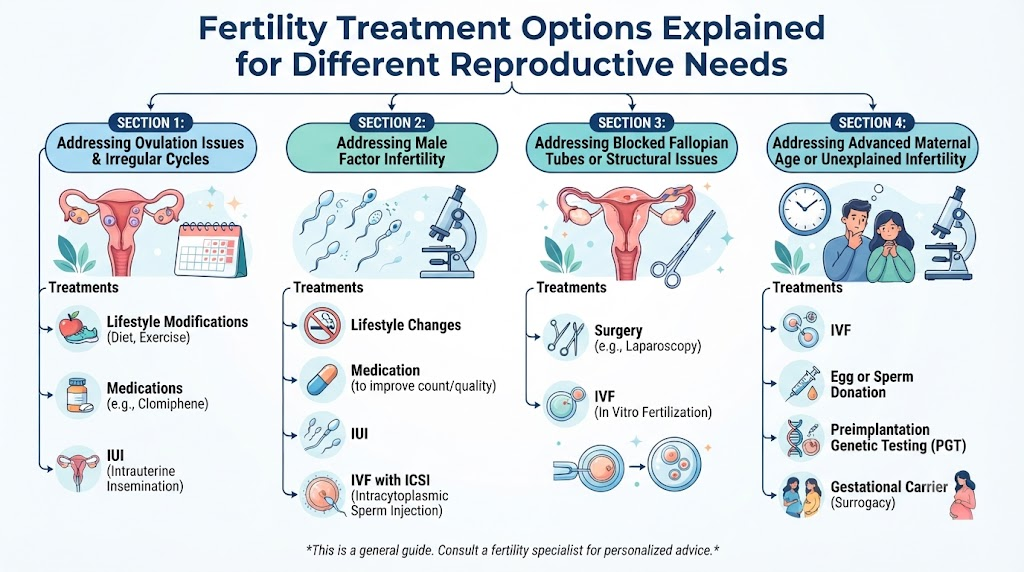
Reproductive medicine encompasses a wide range of medical approaches tailored to specific causes of infertility. Understanding various fertility treatment options helps patients discuss possibilities knowledgeably during medical consultations. Common choices include ovulation induction, intrauterine insemination (IUI), standard in vitro fertilization, intracytoplasmic sperm injection, and donor-assisted procedures.
ICSI vs IVF
Standard in vitro fertilization involves placing eggs and sperm together in a laboratory dish to allow fertilization to occur naturally. In contrast, intracytoplasmic sperm injection involves the direct injection of a single healthy sperm into a mature egg. When evaluating ICSI vs IVF, specialists consider specific male-factor infertility considerations or previous fertilization challenges, though the broader preparation and transfer stages remain largely similar.
| Factor | IVF | ICSI |
|---|---|---|
| Basic Process | Sperm and eggs are co-incubated in a dish for natural fertilization. | A single sperm is micro-injected directly into a mature egg. |
| Fertilization Method | Natural selection of sperm in a controlled laboratory environment. | Laboratory technician selects and injects a single sperm. |
| Common Clinical Considerations | Often used for tubal, unexplained, or mild male-factor infertility. | Frequently selected for severe male-factor infertility or past fertilization failure. |
| Laboratory Involvement | Moderate oversight during incubation and monitoring. High precision handling during micro-injection. | |
| Treatment Similarities | Ovarian stimulation, egg retrieval, embryo culture, and transfer steps are identical. | |
| Important Considerations | Determined by clinical diagnosis and specialist recommendation. |
Understanding Egg Freezing Cost
Fertility preservation has become an increasingly discussed option for individuals wishing to safeguard their reproductive potential. When researching egg freezing cost, patients encounter expenses similar to the initial stages of IVF, including medical consultations, ovarian stimulation medications, follicular monitoring, and surgical egg retrieval. Additional costs include laboratory freezing (vitrification), annual storage fees, and future expenses related to thawing, fertilization, and transfer.
How to Evaluate IVF Clinic Information
Reviewing provider details effectively requires a structured approach. Patients should verify clinic accreditations, examine the transparency of published pricing, and understand the methodology behind reported clinical outcomes. Ensuring that a medical center employs board-certified specialists and maintains certified embryology laboratories provides an additional layer of confidence during the research process.
Questions to Ask an IVF Clinic Before Treatment
- What specific diagnostic tests are necessary before beginning treatment?
- What treatment protocol is recommended for our diagnosis, and what are the expected timelines?
- Can you provide a comprehensive, itemized breakdown of anticipated costs and medication expenses?
- How are your success rates calculated, and how do they apply to our specific age group and diagnosis?
- What laboratory standards and certifications does your facility maintain?
- What provisions are in place for embryo freezing, storage, and subsequent transfers?
- How are patient inquiries handled outside of regular appointment hours?
- What support services or counseling resources are available during treatment?
- Are there alternative treatment options we should consider before proceeding?
- Who will be our primary point of contact throughout the treatment cycle?
Who Can Use IVFHospitalsNow.com?
People Beginning Fertility Research
Individuals who are new to reproductive health can use organized platform information to learn basic terminology, understand treatment pathways, and familiarize themselves with standard procedures.
Couples Exploring IVF
Those actively considering in vitro fertilization can research clinic profiles, treatment stages, financial considerations, and helpful consultation questions in one centralized location.
People Comparing Fertility Clinics
Platform resources help users organize evaluation criteria, allowing them to compare different centers based on location, services, and transparent facility details.
People Researching Treatment Abroad
International patients can utilize structured guides to understand the complexities of cross-border medical travel, cost comparisons, and necessary logistical planning.
People Exploring Fertility Preservation
Individuals interested in proactive family planning can find general educational overviews regarding egg freezing processes and associated financial considerations.
People Seeking Fertility Treatment Information
Readers preparing for initial medical consultations can access clear, evidence-based educational material to help structure productive conversations with qualified specialists.
Step-by-Step Guide to Researching Fertility Care
- Understand Your Fertility Information Needs: Identify what specific aspects of treatment, cost, or clinic discovery you need to research.
- Research Available Treatment Options: Familiarize yourself with general reproductive procedures, from basic medications to advanced assisted technologies.
- Find Relevant IVF Clinics: Use discovery platforms to locate medical centers matching your geographic and logistical preferences.
- Review Clinic and Specialist Information: Examine provider credentials, laboratory standards, and available support services.
- Understand Treatment Costs: Gather itemized estimates and identify potential incidental expenses associated with your care plan.
- Review Success-Rate Information Carefully: Analyze clinical outcome data in the context of your personal age and medical diagnosis.
- Prepare Questions for the Clinic: Compile a clear list of inquiries to address during your initial medical consultation.
- Discuss Your Options With a Qualified Fertility Specialist: Share your research findings with a licensed professional to determine a personalized medical plan.
Common Challenges When Researching IVF Treatment
Navigating the landscape of reproductive medicine presents several common hurdles. Patients frequently face an overwhelming volume of online information, making it difficult to separate evidence-based facts from promotional claims. Additionally, comparing clinic prices can be challenging when different providers structure their fee schedules in unique ways. Varying definitions of clinical outcomes and dense medical terminology further complicate independent research. Patients also encounter logistical questions regarding travel requirements and international planning. To handle these challenges effectively, individuals benefit from relying on structured, neutral informational platforms, maintaining organized notes, and verifying all critical clinical details directly with licensed healthcare providers.
Best Practices for IVF Clinic Research
- Research multiple relevant providers to establish a baseline for comparison.
- Examine clinic credentials, licensing, and laboratory accreditations thoroughly.
- Clarify exactly what services and medications are included in quoted treatment costs.
- Review success-rate statistics with an understanding of the underlying patient demographics.
- Verify specialist qualifications and areas of clinical expertise.
- Inquire about alternative medical treatments suitable for your diagnosis.
- Confirm all financial and clinical details directly through official clinic channels.
- Keep medical records, estimates, and research notes organized in one place.
- Discuss all personal treatment decisions openly with a qualified fertility specialist.
How to Use Online Fertility Information Responsibly
Online resources play a valuable role in early education, but they should always be used as a supplement to professional medical guidance rather than a substitute. Readers should verify the credentials of information sources, look for current data, and avoid relying solely on anecdotal reviews or testimonials. Because medical circumstances vary greatly from person to person, any generalized information regarding treatments, costs, or outcomes must be confirmed directly with licensed healthcare professionals who can provide tailored evaluations.
Frequently Asked Questions
What is IVFHospitalsNow.com?
It is an online fertility-care platform designed to help individuals research treatment options, explore medical centers, and discover providers through structured educational resources.
How can people find IVF clinics?
Users can explore provider directories and informational summaries categorized by location, available services, and facility features.
What factors affect IVF treatment cost?
Overall expenses are influenced by geographic location, specific clinic pricing, required medications, laboratory procedures, diagnostic testing, and the number of cycles performed.
How should patients understand IVF success rates?
Success statistics should be evaluated in the context of patient age, specific diagnosis, and reporting methodology, viewing them as general benchmarks rather than individual guarantees.
How can people compare IVF clinics?
Clinics can be evaluated objectively by examining treatment offerings, specialist credentials, cost transparency, outcome reporting methods, and patient support services.
What should people check when searching for IVF clinics near me?
Patients should consider travel distance, appointment flexibility, monitoring frequency, and whether local facilities possess the necessary specialized laboratory capabilities.
What should patients consider before IVF treatment abroad?
International patients must evaluate clinic licensing, laboratory standards, travel logistics, communication barriers, language support, and post-treatment follow-up care.
Why can IVF cost by country vary?
Cost differences between countries are driven by local healthcare systems, currency fluctuations, regulatory requirements, and the inclusion or exclusion of medications and laboratory fees.
What is the difference between ICSI and IVF?
Standard IVF allows sperm and eggs to interact naturally in a dish, whereas ICSI involves the direct injection of a single sperm into an egg, typically utilized for specific male-factor considerations.
What factors can affect egg freezing cost?
Egg freezing expenses depend on initial consultations, stimulation medications, follicular monitoring, surgical retrieval, laboratory vitrification, annual storage fees, and eventual thawing and transfer costs.
Conclusion
Researching reproductive health requires patience, careful evaluation, and access to dependable resources. Platforms like IVFHospitalsNow.com help simplify this initial exploration by organizing information regarding IVF clinics, treatment procedures, cost factors, and clinical outcomes into an accessible format. While online research provides a strong foundation, every fertility journey is unique. Patients should use educational insights to prepare meaningful questions, evaluate options objectively, and discuss their personal health goals with qualified fertility specialists to determine the most appropriate path forward.
Leave a Reply