Unlocking Efficiency with Robot Simulation and ROS 2 Robotics Operations

September 22, 2026 · 28 reads
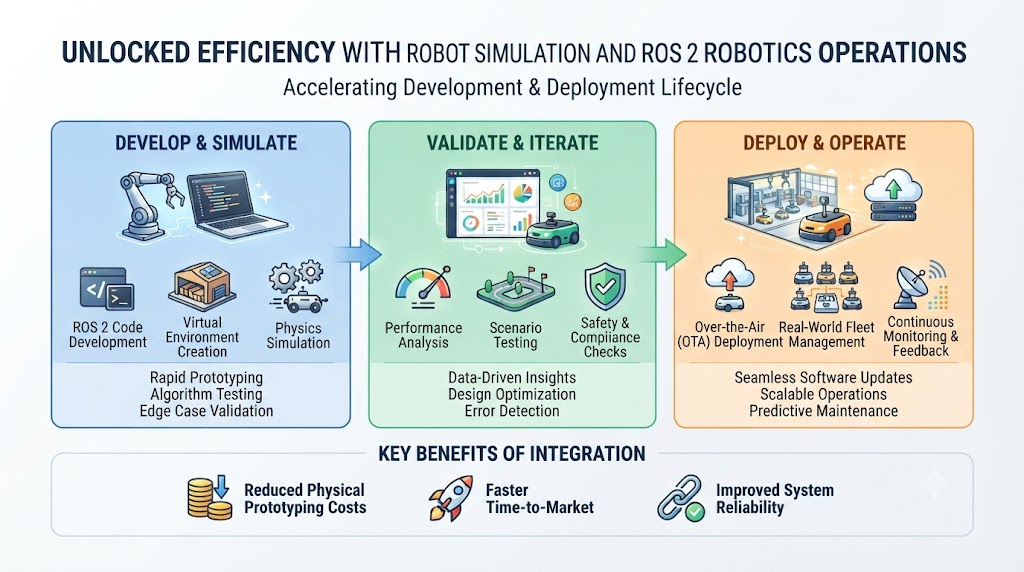
Introduction
Robots do a lot of helpful jobs today. They move heavy packages in warehouses, sweep floors, and build cars in huge buildings. But these metal helpers do not run all by themselves. They need people, smart tools, and good plans to stay safe and healthy. This overall practice is known as RobotOps. It brings together software updates, safety checks, and remote tools to help machines do their daily work without trouble. This article explores how teams manage groups of smart machines, use helpful technology, and keep everything running smoothly.
What is RobotOps and Why Does It Matter?
RobotOps is short for robotics operations. It is a set of helpful habits and rules. It helps teams build, test, and fix robot software just like programmers do for phone apps. Robots are really computers with wheels, arms, and sensors. They need constant care. If a single robot stops working, a whole factory line can pause. RobotOps helps workers spot little problems early. It saves time and money. It also keeps human workers safe on the floor.
Managing Your Robot Fleet
When a company has only one robot, it is easy to watch. But when a company has fifty or five hundred robots, things get tricky. This is where Robot Fleet Management comes in handy.
Fleet management means watching every machine at the exact same time from one spot. Think of it like an airport control tower, but for smart helpers on wheels.
- Tracking battery power: Knowing when a machine needs to roll back to charge.
- Checking health: Seeing if tires or motors are wearing out.
- Guiding traffic: Making sure robots do not bump into each other in narrow hallways.
- Sending updates: Giving all machines new software at the same time.
Powering Smart Machines with Software
Robotics Software is the true brain of any machine. It tells the robot how to move, see its surroundings, and make smart choices. Without good code, a robot is just a heavy pile of metal.
Most modern robots run on a special set of tools called ROS 2. This stands for Robot Operating System version two. It is an open system that lets different developers share code, add new sensors, and build better programs much faster. It helps the brain and the body of the machine talk to each other cleanly.
Testing Safely with Robot Simulation
Before you put a new robot program onto a real machine, you need to test it. Testing on real hardware can cause crashes, broken parts, and high repair costs.
Robot Simulation solves this problem. It lets engineers build a fake, digital world on a computer screen.
| Feature | Real World Testing | Virtual Simulation |
| Safety Risk | High (can hit walls or people) | Zero (completely digital) |
| Speed | Slow (takes time to reset) | Fast (can run many tests at once) |
| Cost | Expensive if parts break | Low (runs on standard computers) |
Helping Robots Move on Their Own
Many modern machines do not need tracks or wires painted on the floor. Autonomous Mobile Robots use lasers, cameras, and smart maps to find their own way around.
These mobile helpers are very common in large warehouses today. They pick up shelves and bring them right to human workers. To do this well, they rely on Robotics Automation. This means the robots repeat useful tasks over and over without getting tired or making silly mistakes.
Working with Industrial Robotics
While mobile robots move around floors, Industrial Robotics focuses on heavy-duty jobs. Think of giant robotic arms in car plants welding metal frames or putting tiny computer chips together.
These machines need extreme precision. Even a tiny software error can ruin a whole batch of products. That is why strict rules and constant checks are needed in heavy manufacturing.
| Operation Area | Main Goal | Common Tool |
| Warehouse | Move inventory safely | Autonomous Mobile Robots |
| Factory Floor | Build heavy goods fast | Industrial Robotics arms |
| Control Room | Watch health and data | Robotics Operations Center |
The Role of the Robotics Operations Center
A Robotics Operations Center is the central office where team members watch all active machines. It is full of computer screens showing live data feeds.
Workers inside this center look closely at telemetry. Telemetry means data sent by a robot about its status and activity. If a motor gets too hot or a sensor gets dusty, the system sends an alert right to the center. Workers can then send a quick fix before the machine breaks down completely.
Frequently Asked Questions About RobotOps
What does RobotOps mean in simple terms?
It is the way engineers manage, update, and fix robots using software tools and best practices.
Why do companies use ROS 2?
It is a popular software framework that helps different robot parts and programs work together easily.
What is a robot fleet?
It is a group of multiple robots working together in the same building or area.
How do engineers test robots safely?
They use computer simulation to test new code in a fake digital world before using it on real machines.
What is telemetry?
It is the live data that a robot sends back to the control room about its health and battery.
Can robots fix themselves?
No, but software can spot problems early and alert human workers to fix them.
What is an Autonomous Mobile Robot?
It is a smart robot that can drive around a room or warehouse without human steering.
Why is fleet management important?
It helps companies watch dozens or hundreds of robots at the same time to prevent crashes and delays.
Where can people learn more about these tools?
Platforms like RobotsOps.com offer great educational articles and technical knowledge on the subject.
Is robotics automation only for big car factories?
No, it is now used in small warehouses, hospitals, and cleanrooms as well.
Final Thought
Managing smart machines takes more than just strong hardware. It requires careful planning, smart software updates, and constant watching. As automation grows, keeping robots healthy and safe becomes even more important. By using good practices and keeping tools organized, teams can make sure their machines run well every single day. Sites like RobotsOps.com help people learn these skills so they can build a better future with modern technology.
Leave a Reply